
Precision at the speed of light.
AI + Imaging: guiding cancer surgery to better outcomes.
Today, surgeons learn the margin result days after the operation.
Pathology takes five to ten days. When the pathologist finds cancer at the edge of the removed tissue, the patient comes back for a second surgery.
1. Metcalfe et al., JAMA Surg 2017;152(11):1084.
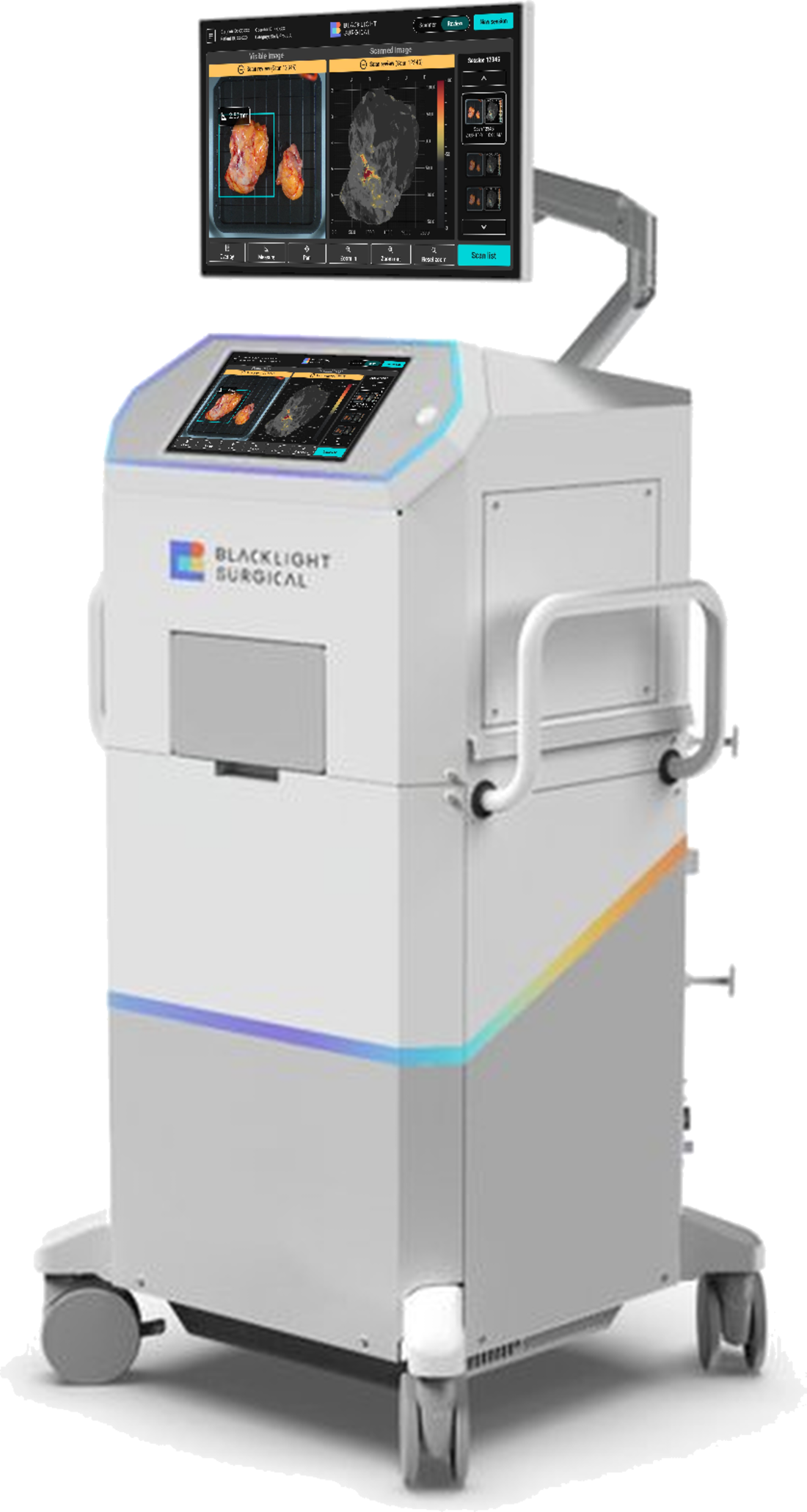
LUCY provides the margin results in the operating room during the surgery.
From excised tissue to a map on the screen within two minutes.
- 1
Scan
The specimen goes in the tray, the drawer closes, one button starts the scan.
- 2
See
In under two minutes a color-coded map shows where the surface carries the signature of cancer.
- 3
Decide
The surgeon takes more tissue from the flagged spot in the same session, or closes.
- 4
Close
A complete resection in the first operation, so fewer patients come back for a second.
≥90% sensitivity and specificity vs. histopathology.
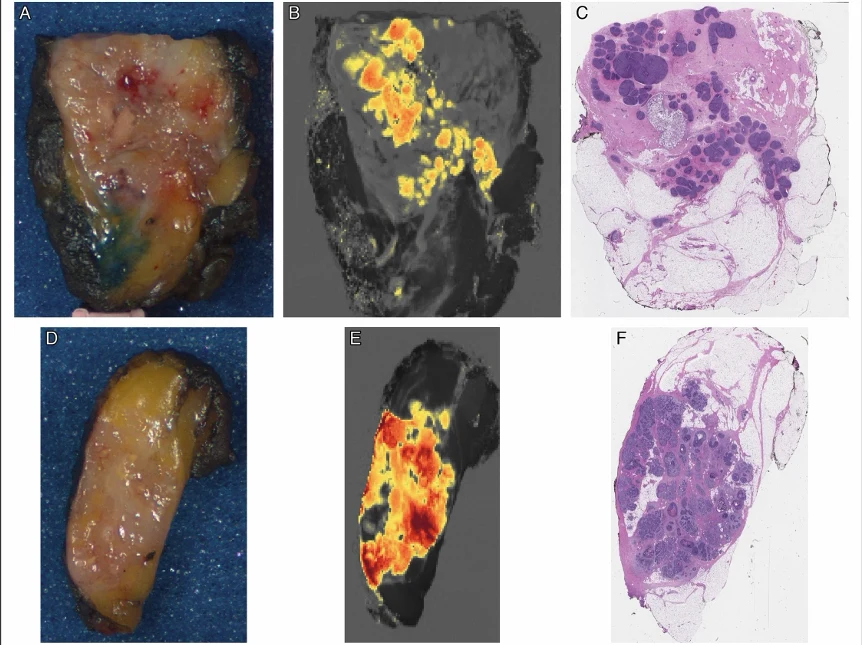
Results obtained using LUCY on slices from breast lumpectomy specimens.
- Accurate detection of breast cancer
- Fast margin analysis in the OR
- No specialist needed for interpretation; no workflow compromise
Investigational device Study results are from ex vivo clinical research and are not a substitute for FDA approval or clearance.